-
Interior Cedar - Hemlock
Back to Web Atlas
Interior Cedar - Hemlock 
The Interior Cedar-Hemlock Zone is located predominately in southeast British Columbia. Easterly flowing air masses cause long, warm summers and cool wet winters that are favourable for an abundant species of trees. The climate of this zone makes the forestry industry very productive.
Range
The Interior Cedar-Hemlock Zone is located in Southeast and Northwest British Columbia. Most of the zone occurs in the southeast quarter of the province where it reaches the lower slopes of the Columbia and Rocky Mountains. In the Northwest, the zone occupies most low elevations and mid elevations in the Bass River Basin and smaller areas of the Skeena, Iskut, and Stiline basins.
Rocky Mountain Reservoir

Climate
The long, warm summers and cool, wet sinters are owed to the predominance of easterly-flowing air masses. Although in most of the zone, summers are relatively dry. The slow-melting snowpack helps keep soil moisture levels high during the summer. Warm moist conditions prevail in southeast parts of the zone called the Interior Wet Belt while the northwest is cooler and wetter.
Vegetation
There are more tree species in this zone than in any other ecological zone in British Columbia.
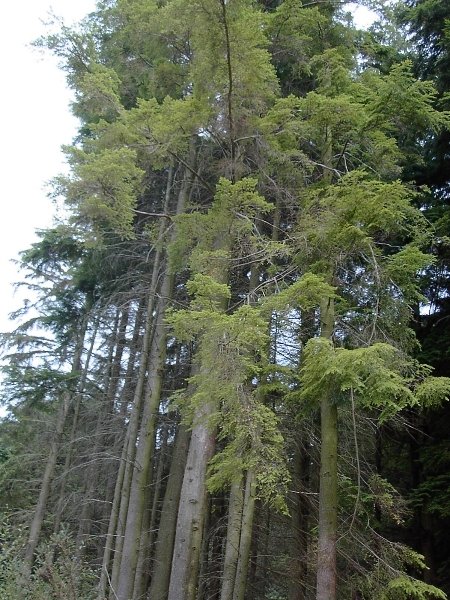
Coniferous forests; predominantly Western Red Cedar and Western Hemlock dominate this zone. These species are supplemented by Ponderosa Pine, Douglas-fir, Western Larch, Lodgepole Pine, and Western White Pine. In dry and cool areas and wet and cool areas, deciduous trees also grow. Older forests predominate in wetter parts of the zone where fires are less frequent.
Red Cedar, Hemlock, Spruce, and skunk cabbage surround wetland areas while devil’s club and ferns line the streams.
Red Wood Cedar Western Hemlock Skunk Cabbage


Wildlife
Abundant moisture and a long growing season provide ideal wildlife habitat. However, long, cold winters present problems for some species. Most successful wildlife species in the zone have adapted to surviving in or avoiding the deep snow. Some species like the mule deer, white-tailed deer and Rocky Mountain elk migrate to the warmer South Interior Douglas-fir Zone to spend the winter while others hibernate. Moose are common in the Northern areas as they have adapted to moving through the deep snow.
This zone is also home to many species of birds like the Pileated Woodpecker and bark-inhabiting insects.
Rocky Mountain Elk
Pileated Woodpecker


Resources
Forestry is the primary land use as the favourable climate makes forests very productive. The wet climate and mountainous terrain also allow for damming for hydroelectric power. Agriculture is confined to valley bottoms and southern parts of the zone.
Coursier Hydroelectric Dam
